Focused capacity range
48K and 72K nominal product classes in standard and MAX configurations.

APOLLO / Water-to-water geothermal
APOLLO engineers water-to-water geothermal heat pumps for ground-source hydronic heating, chilled-water cooling, domestic hot water and pool applications. Standard and MAX high-temperature equipment give resellers and project teams a focused 4- and 6-ton platform with published performance, controls and technical documentation.
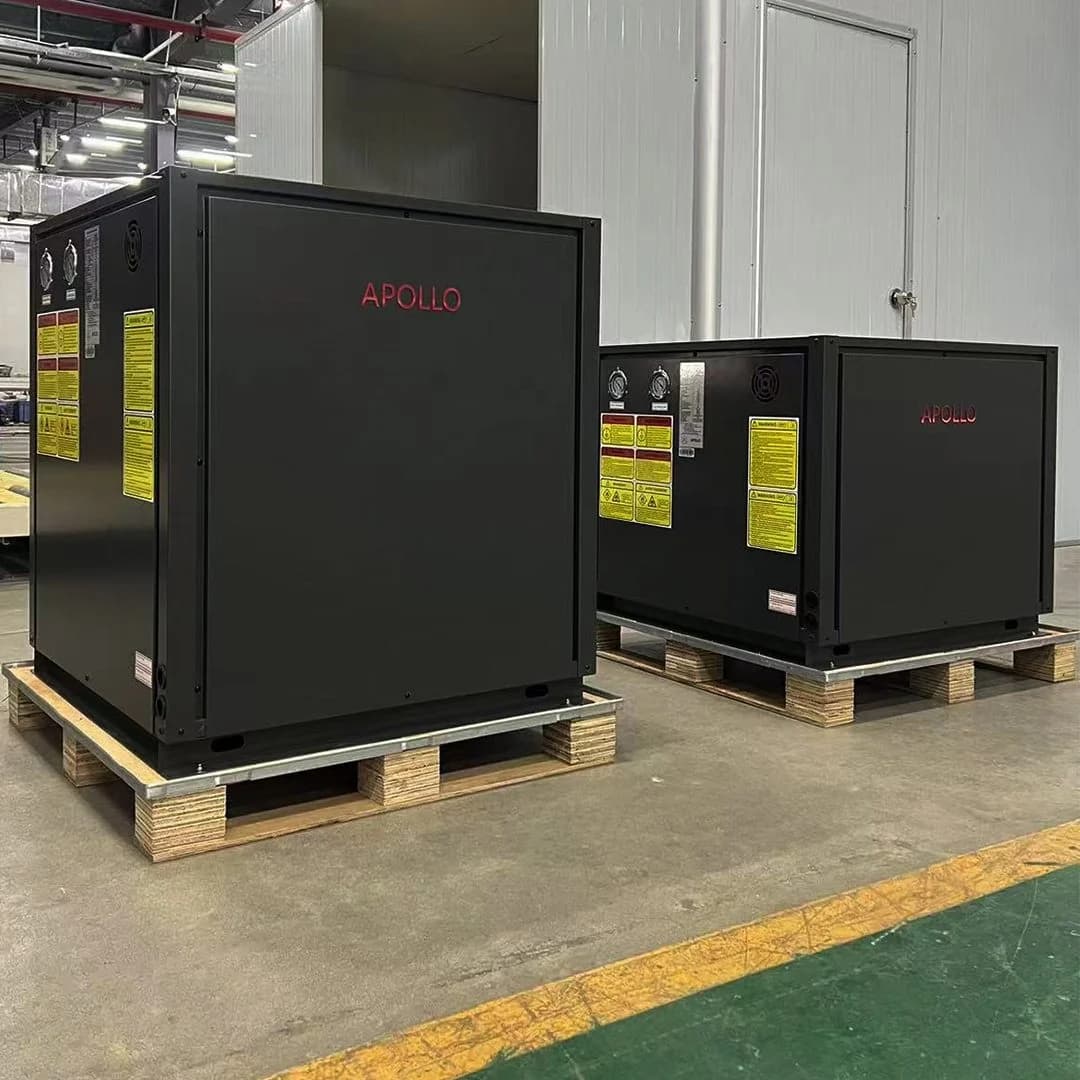
48K and 72K nominal product classes in standard and MAX configurations.
Model- and condition-specific data from the APOLLO water-to-water manual.
Separate source-water and building-water loops let the geothermal system connect the ground source to the building's hydronic distribution.
Water-to-water engineering
A water-to-water geothermal heat pump transfers energy between a source-water loop and the building's hydronic loop. The source may be connected to a properly designed borefield, well or other qualified ground-source arrangement. On the building side, heated or chilled water can be distributed to radiant floors, fan-coil units, air handling units, storage tanks and other compatible hydronic equipment.
Because the heat pump is indoors and exchanges energy through water connections, the system is not exposed to outdoor air in the same way as an air-source unit. Source-loop temperature, flow and water quality still matter. The geothermal field and pumps must be designed to provide the entering-water conditions and flow required by the selected APOLLO model across the operating season.
APOLLO focuses on water-to-water geothermal equipment rather than a packaged water-to-air furnace. This gives the designer freedom to separate energy generation from room distribution. One hydronic plant can support radiant heating, fan-coil or air-handler cooling, domestic-hot-water storage and pool heating when the loads, temperatures, tanks and controls are correctly coordinated.
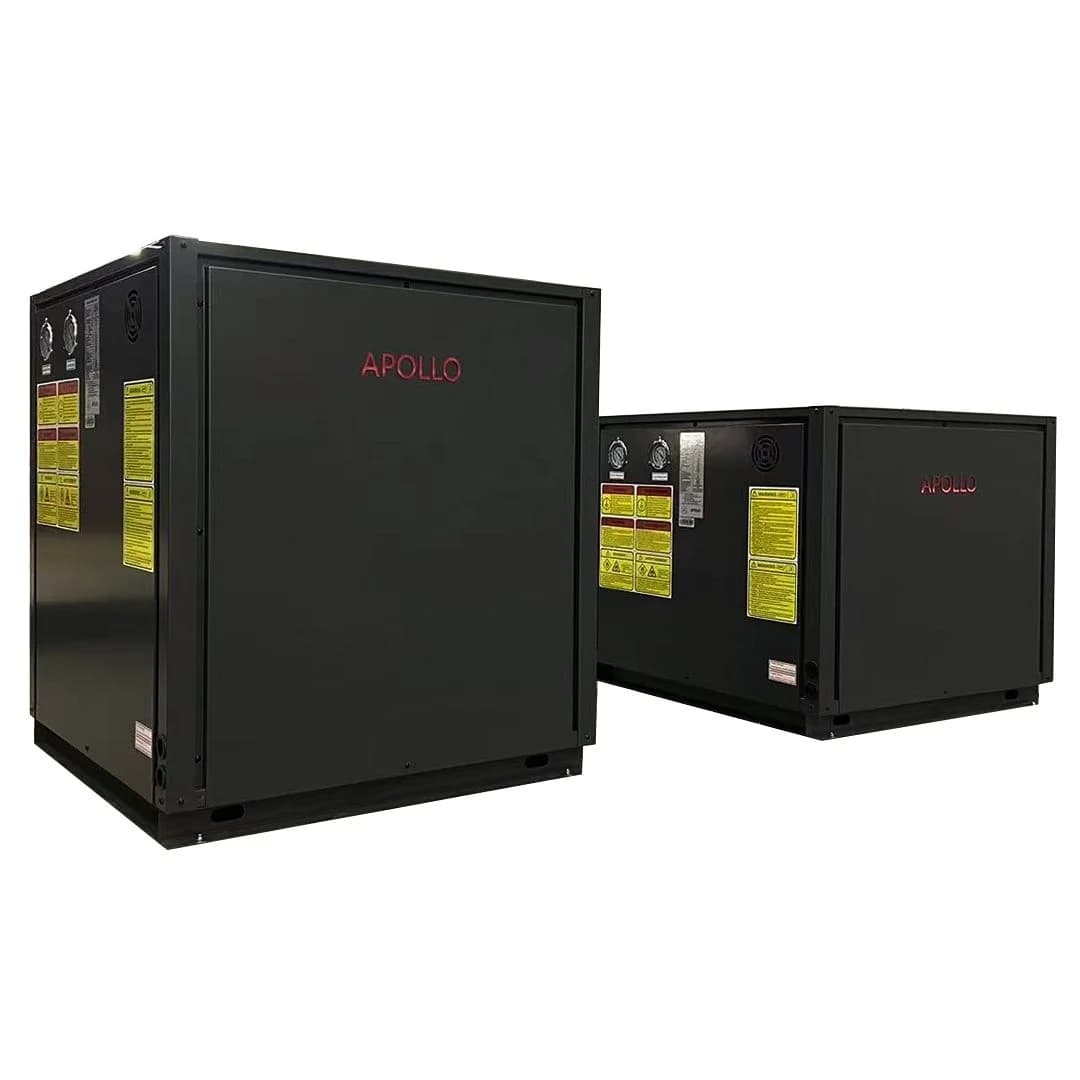
The field, well or other qualified source provides the entering-water temperature and flow used by the heat pump.
The heat pump supplies heated or chilled water to compatible terminals, tanks and distribution equipment.
The cabinet, pumps and service connections remain inside the mechanical space for year-round access.
Published performance
Geothermal performance depends on entering source-water temperature, building-side leaving-water temperature and flow. APOLLO's standard 4-ton AP-GEO-4T data publishes a heating COP range of 3.3 to 6.7 and a cooling COP of 4.2 across the documented test conditions. The standard 6-ton AP-GEO-6T data publishes a heating COP range of 3.2 to 5.6 and a cooling COP of 4.2.
The upper COP figure should not be treated as an annual guarantee or applied to every load condition. Higher building-side water temperatures generally make the compressor work harder, and a colder source loop changes available capacity and efficiency. Project teams should use the relevant performance table for expected source and load temperatures, then confirm source-loop pumping and building-side flow.
Standard APOLLO geothermal models use twin-rotary DC inverter compressors, R-32 refrigerant and an included Wi-Fi controller. Published sound information lists approximately 48 dB(A) for the 4-ton standard unit and 52 dB(A) for the 6-ton standard unit. Installation location, piping isolation, room construction and operating speed will affect perceived field sound.
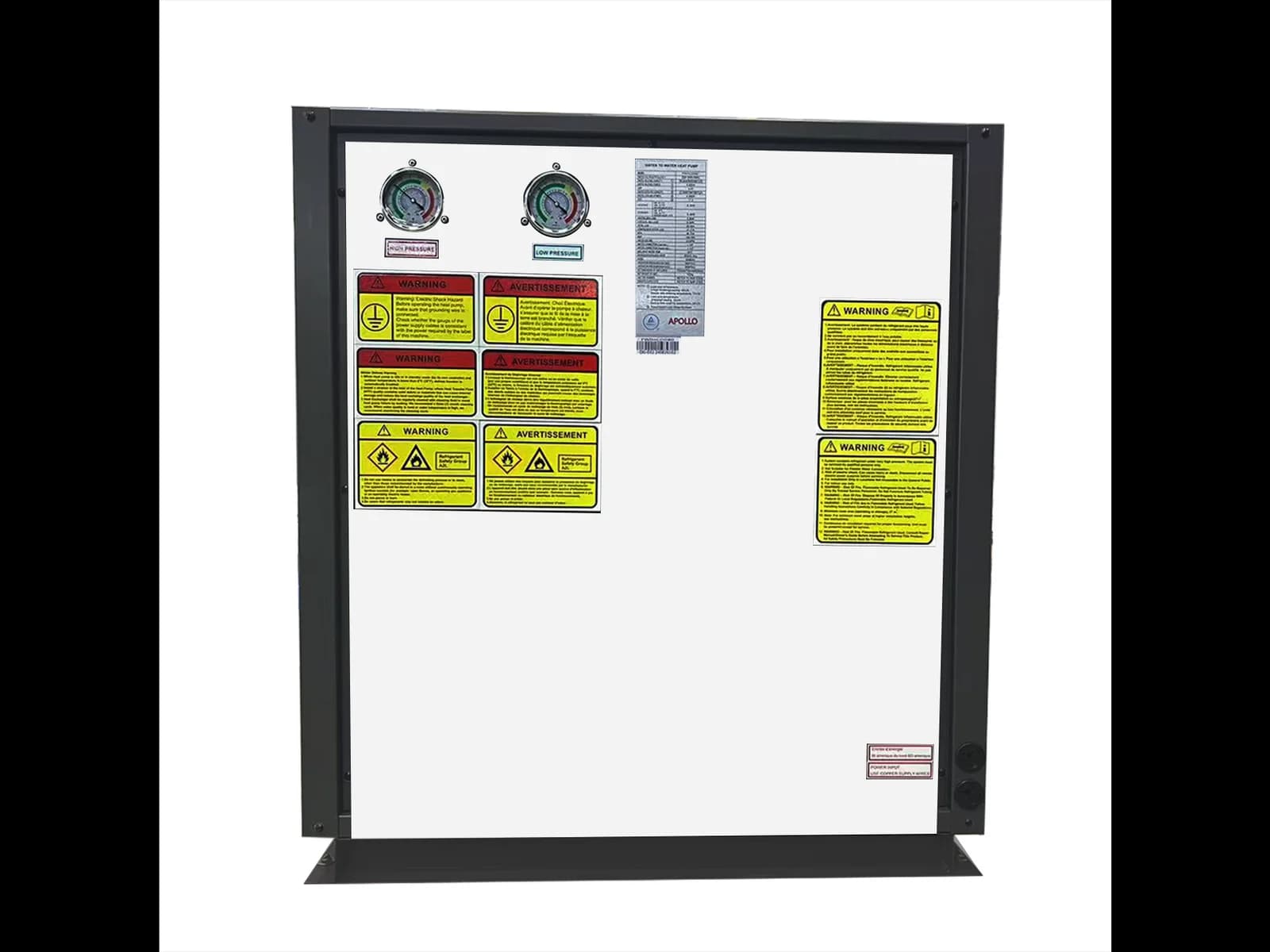
AP-GEO-4T publishes a 3.3-6.7 heating COP range and 4.2 cooling COP across stated manual conditions.
AP-GEO-6T publishes a 3.2-5.6 heating COP range and 4.2 cooling COP across stated manual conditions.
Twin-rotary DC inverter operation allows the compressor to respond to changing water-side demand.
Hydronic applications
Radiant floors are well suited to geothermal heat pumps when their output meets the room load at moderate water temperatures. Fan coils can provide room-by-room heating and chilled-water cooling, while a hydronic air handling unit can distribute heating and cooling through ductwork. Each terminal must be selected for actual water temperatures and flow available from the proposed system.
Domestic-hot-water and pool loads can be incorporated with appropriate storage and heat-exchange equipment. These loads should not simply be added as an afterthought: recovery time, peak demand, target temperature and simultaneous space-conditioning demand influence equipment and tank selection. Buffer storage may also provide thermal mass or hydraulic separation where building-side flow varies by zone.
APOLLO's Hydro Geo Station is supporting mechanical-room equipment for ground-source projects. It can organize circulation, controls and related hydronic functions around the heat pump. Tanks, manifolds, expansion equipment, fan coils and air handlers are available elsewhere in the APOLLO catalog, allowing the geothermal unit to be discussed as part of the complete water system.
Deliver low-temperature hydronic heat through a properly designed slab or panel system.
Use chilled water with correctly selected fan coils, condensate management and controls.
Pair the water loop with a hydronic AHU when the building uses central air distribution.
Integrate DHW or pool heating through suitable storage, heat exchange and operating controls.
Geothermal system integration
A geothermal heat pump works between two water circuits, so the source loop and the building loop need to be reviewed as one system. Source-loop temperature, flow, water quality and seasonal conditions influence the equipment selection. Borefields, wells, pumps and heat exchangers should be evaluated for the entering-water conditions the selected APOLLO unit will see over the project year.
The building side starts with the load and the required supply-water temperature. Radiant floors typically use a different design temperature than fan coils, hydronic air handling units, radiators or baseboards. The right configuration depends on the building's heating and cooling loads, emitter output, zoning, flow requirements and whether high-temperature MAX equipment is appropriate.
DHW, pool heating, buffer or storage tanks, controls, pumps and mechanical-room clearances also belong in the early conversation. APOLLO supports equipment selection, configuration review, technical documentation, reseller opportunities and commercial building projects while the qualified project team completes load calculations, source-field design and final engineering.
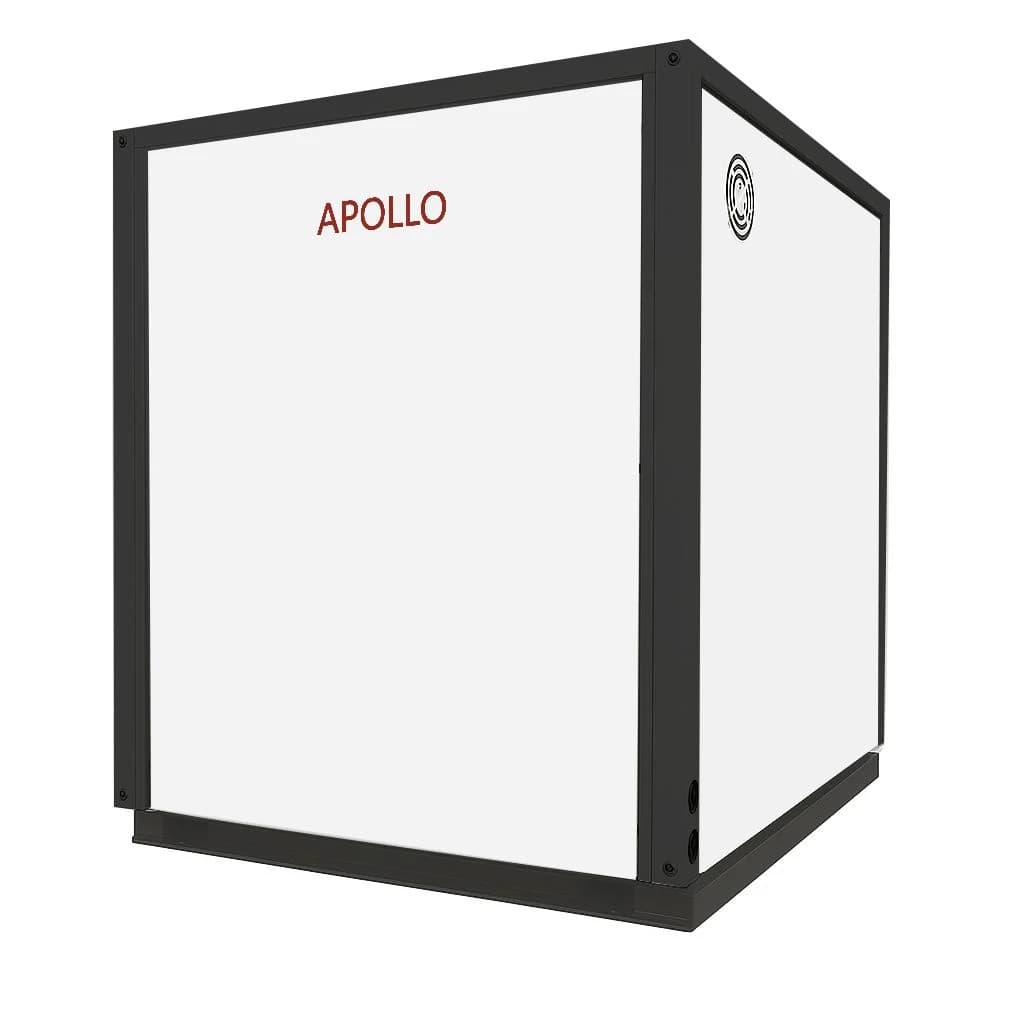
Review source temperature, flow, water quality, borefields, wells, pumps and seasonal entering-water conditions before selecting the unit.
Match building loads and supply-water temperature to radiant floors, fan coils, AHUs, radiators, baseboards and other hydronic emitters.
Coordinate DHW, pool heating, tanks, controls, pumps, service access and connected hydronic equipment around the heat pump.
Reseller and project support
Geothermal opportunities often require more technical qualification than a conventional replacement sale. Source-loop information, building loads, design water temperatures, heating and cooling distribution, DHW demand, electrical service and mechanical-room constraints all shape the proposal. APOLLO supplies published data and related hydronic equipment so those questions can be addressed before a model is committed.
For resellers and distributors, the focused 4- and 6-ton standard and MAX range covers common residential and light-commercial water-to-water applications without becoming a long list of nearly identical cabinets. Hydro stations, tanks, fan coils, air handlers, manifolds and controls provide opportunities to support the complete installed system rather than only the heat pump.
APOLLO reviews reseller opportunities and geothermal building projects in the United States and Canada. Project support can include equipment selection, configuration review and technical documentation. The source field, final load calculations, piping design, code compliance and professional engineering remain the responsibility of the qualified project team.
Standard or MAX geothermal
Both families use a water-to-water architecture. The key difference is the building-side temperature range the project needs.
APOLLO Geothermal
The standard 4- and 6-ton equipment is intended for hydronic systems that can meet the building load within its published water-temperature range.
APOLLO Geothermal MAX
MAX extends the water-to-water platform to heating-water temperatures up to 175°F/80°C for correctly evaluated radiator, baseboard and boiler-replacement projects.
Work with APOLLO
Offer standard, high-temperature and supporting hydronic equipment with manuals, application guidance and system-planning support.
Start a conversationBring source-loop conditions, building loads, water temperatures, flow, distribution and hot-water requirements to equipment review.
Start a conversationTechnical evidence
Use the current manual or technical document when reviewing a model or preparing a project.
Current equipment
The manufacturer pages explain the system. These links lead to the current equipment and model information.
Frequently asked questions
Answers are limited to the current APOLLO range and published technical information.
It transfers energy between a source-water loop and a separate building-water loop. The building loop can then serve radiant floors, fan coils, hydronic air handlers, storage tanks and other compatible water-based equipment.
Yes. Applicable APOLLO water-to-water systems provide heated water for hydronic space heating and chilled water for compatible fan coils or air handlers. System flow, controls, condensation management and terminal selection must support both modes.
APOLLO Geothermal MAX publishes heating-water temperatures up to 175°F/80°C for high-temperature hydronic applications. Building load and emitter output at the proposed water temperature must be verified before equipment selection.
Published standard-model data ranges from 3.3 to 6.7 heating COP for AP-GEO-4T and 3.2 to 5.6 for AP-GEO-6T across stated test conditions; both publish 4.2 cooling COP. Actual performance depends on source and building water temperatures, flow and operating load.
APOLLO reviews reseller and distributor opportunities in the United States and Canada. Contact the team with your territory, customer profile and expected ground-source applications.
Next step
Share the source conditions, building loads, hydronic emitters, required temperatures and hot-water needs. APOLLO can help identify the relevant geothermal equipment and documents.