Variable-capacity technology
Enhanced Vapor Injection and DC inverter operation across current APOLLO air-to-water lines.

APOLLO / Air-to-water
APOLLO engineers air-to-water heat pumps for hydronic heating, chilled-water cooling, domestic hot water and pool heating. Standard, high-temperature and commercial platforms give resellers and project teams a documented path from individual buildings to 50- to 200-ton commercial HVAC systems.
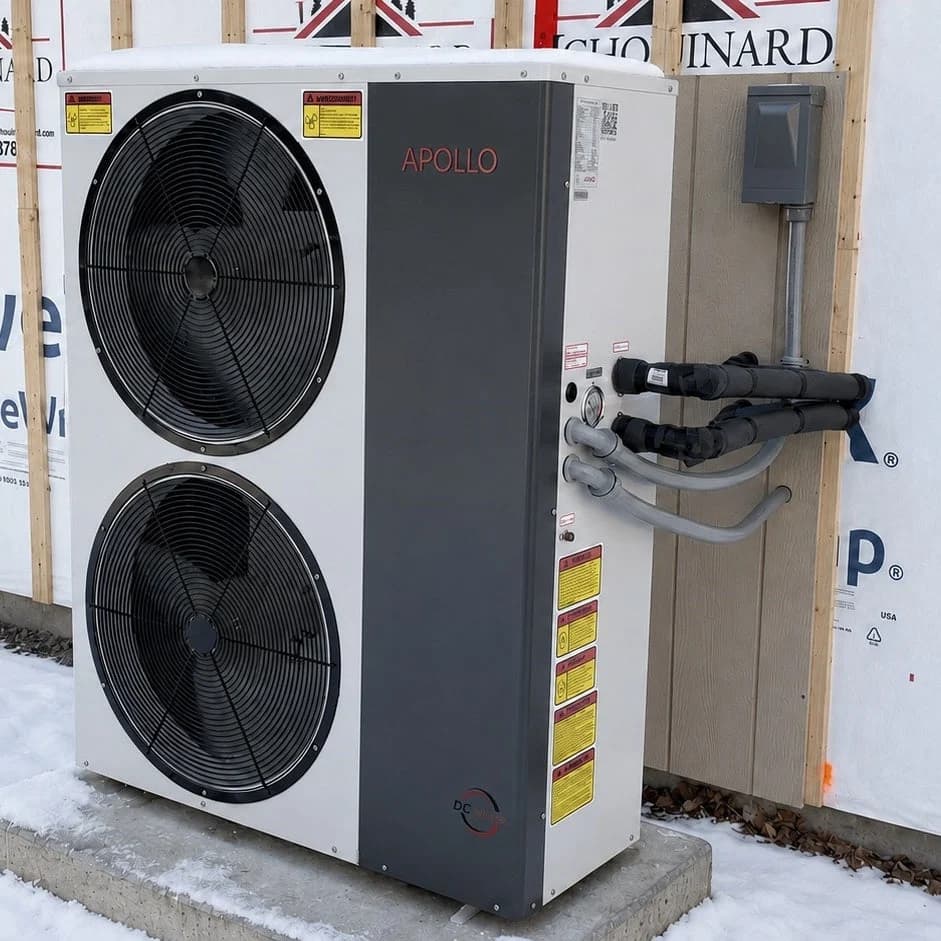
Enhanced Vapor Injection and DC inverter operation across current APOLLO air-to-water lines.
High-temperature hydronic output for applicable radiator and baseboard projects.
Project-specific air-to-water configurations with three-phase electrical options.
Hydronic heating and cooling
An air-to-water heat pump extracts energy from outdoor air and transfers it to water circulating through the building. That water can feed low-temperature radiant floors, fan-coil units, a hydronic air handler, a buffer tank or an indirect domestic-hot-water tank. When the system operates in cooling mode, the same water loop can deliver chilled water to compatible fan coils or air handlers.
This water-side architecture gives designers more flexibility than a single-purpose forced-air appliance. A project can combine radiant heating with ducted or room-by-room cooling, separate thermal storage from peak demand, and integrate domestic hot water or pool heating where the selected model and system design allow it. The heat pump remains the source, while the hydronic equipment determines how that energy is stored, controlled and delivered.
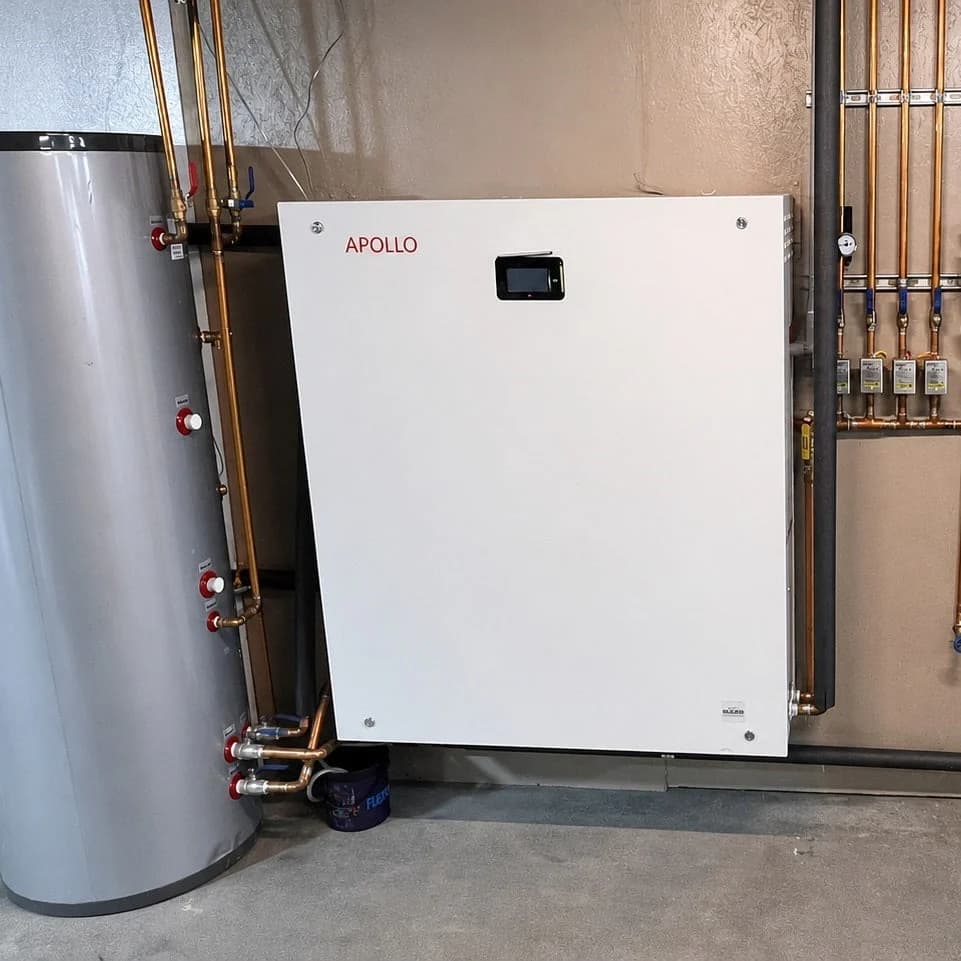
APOLLO engineers the heat-pump platform together with the supporting hydronic system. Hydro stations can organize circulation pumps, valves, controls, pressure-management components, backup heat and service points. Tanks, manifolds, fan coils, air handlers and thermostats can then be selected around the building loads and required water temperatures rather than treated as unrelated accessories.
Supply radiant floors, fan coils, air handlers and other correctly selected hydronic emitters.
Reverse operation can supply compatible fan-coil and air-handler systems for cooling and dehumidification.
Integrate an appropriate indirect tank and controls where the model and design conditions support the DHW load.
Transfer heat through the correctly sized and specified pool-side heat-exchange arrangement.
Cold-climate inverter design
Current APOLLO air-to-water families use Enhanced Vapor Injection with DC inverter control. EVI supports the refrigerant cycle under lower-ambient heating conditions, while inverter operation allows compressor output to adjust as the building demand changes. That modulation is valuable in climates where required capacity can vary substantially between a mild shoulder-season day and the design winter condition.
APOLLO standard-series equipment uses R-32 refrigerant and includes Wi-Fi-capable control. Standard 3.5-, 5- and 6-ton models publish a heating COP of 4.6 at the stated 41°F test condition. At the documented 10°F condition, the same models publish COP values of approximately 2.11 to 2.13.
APOLLO MAX models publish heating COP values of 4.8 to 4.9 at 41°F and 3.5 to 3.6 at 10°F for the stated test conditions. Those figures are useful within the published data, but they are not a promise of annual field performance. Actual capacity and efficiency depend on outdoor temperature, entering and leaving water temperatures, flow, defrost, system design and building load.
The catalog and current manuals do not use one identical ambient-range statement for every series, so this page does not publish a universal minimum operating temperature. Project selection should use the exact manual and performance table for the model being considered, with supplemental or backup capacity reviewed against the building's design load where required.
COP and capacity are tied to stated air and water temperatures so project teams can interpret the figures in context.
DC inverter control adjusts compressor operation instead of relying only on fixed-output on/off cycling.
Applicable APOLLO models include a Wi-Fi smart controller for system monitoring and operating adjustments.
Complete-system integration
Good air-to-water performance depends on stable flow and a distribution system designed for the required water temperature. Radiant floors can often deliver the heating load with lower supply temperatures. Fan coils and air handlers need coil and airflow selections that match both heating and chilled-water conditions. Existing radiators or baseboards may require higher water temperatures, which changes the appropriate heat-pump series and expected performance.
Buffer tanks can add thermal mass, separate heat-pump flow from variable building-side flow and reduce short cycling when correctly sized. Domestic-hot-water tanks require the right coil capacity, storage volume and control sequence. Pumps, expansion equipment, air elimination, valves, manifolds and controls must all be coordinated with system volume, pressure and operating mode.
APOLLO Hydro Stations are intended to bring many of those mechanical-room functions into an organized assembly. For contractors, this can simplify component coordination and create a clearer service layout. For resellers, it expands the conversation from an outdoor unit to the system the installer actually needs. Final piping, sizing and controls still depend on the project and must be reviewed by the responsible professional.
A natural fit for low-temperature hydronic heating when the floor output meets the room load.
Provide hydronic heating and chilled-water cooling through room units or ducted air distribution.
Support storage, hydraulic separation, domestic hot water and multi-zone distribution.
Use APOLLO MAX where the verified project water temperature calls for a high-temperature platform.
Commercial air-source projects
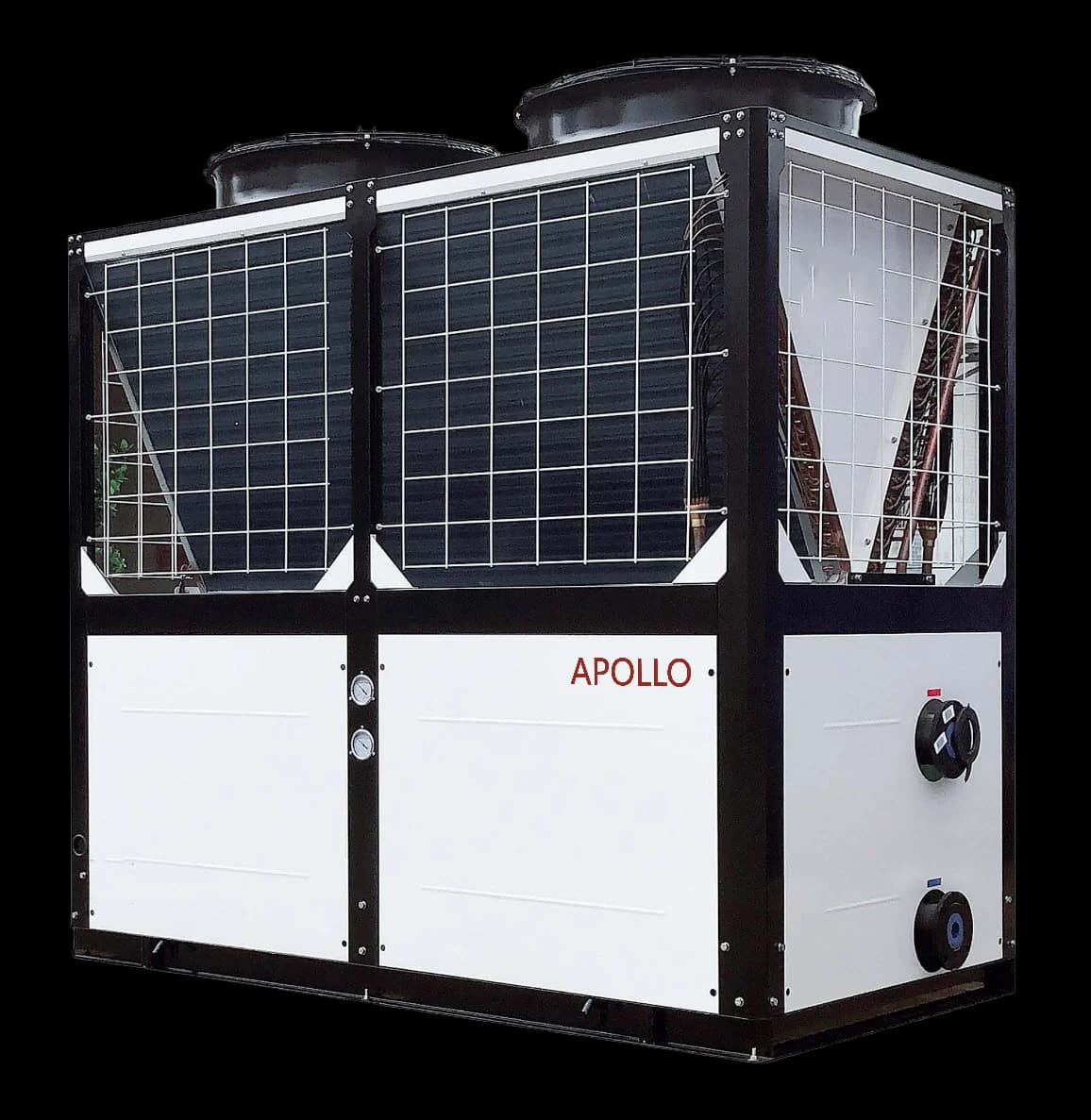
APOLLO's air-to-water range extends beyond individual residential equipment. A three-phase 6-ton platform is available for light-commercial and modular installations, while the dedicated commercial line is configured at 50, 100, 150 or 200 tons for larger building loads. Multiple units can be combined where staged capacity, operating flexibility or redundancy is part of the mechanical design.
The commercial platform supports hydronic heating, cooling and domestic-hot-water applications. Current published options include 208V, 480V and 600V three-phase electrical configurations, EVI technology, full DC inverter compressors and R-32 refrigerant. A 50-ton configuration publishes 600,000 BTU/h rated heating capacity and 500,000 BTU/h rated cooling capacity; the complete operating point and electrical data belong in the commercial manual and project submittal.
Hotels, multifamily buildings, offices, healthcare buildings and campuses can have very different load shapes even at similar nominal tonnage. APOLLO commercial support therefore starts with heating and cooling loads, design water temperatures, DHW demand, electrical service, distribution, installation constraints and redundancy. Technical information and submittal support can then be assembled around the proposed equipment. Licensed project professionals remain responsible for final design and compliance.
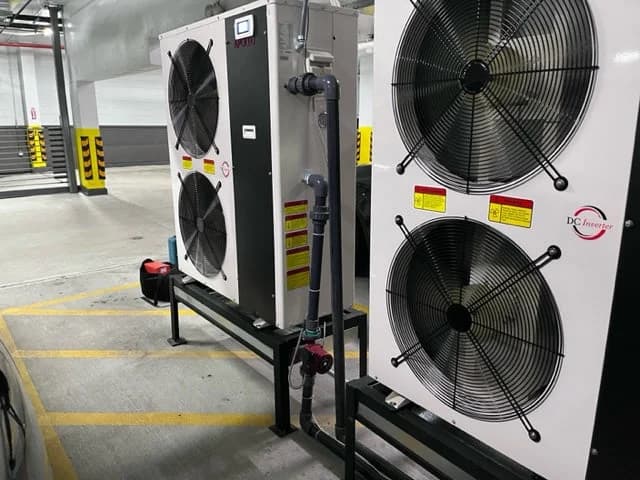
Select 50-, 100-, 150- or 200-ton configurations around the actual commercial building requirements.
Published configurations include 208V, 480V and 600V electrical service.
Technical data and commercial submittal support are available for engineers, contractors and project teams.
Reseller supply
An air-to-water reseller needs to qualify more than tonnage. Climate, building load, emitters, design water temperature, cooling expectations, domestic-hot-water demand and electrical service all affect the product conversation. APOLLO supports resellers with a defined standard range, a MAX high-temperature range, commercial options and the hydronic equipment that completes the mechanical room.
Published specifications and manuals help sales teams avoid vague claims and move qualified opportunities toward technical review. A reseller can address low-temperature new construction, existing high-temperature emitters, light-commercial systems and larger commercial building work without presenting every application as the same product.
APOLLO considers reseller and distributor opportunities across the United States and Canada. Contact the team with your service territory, customer profile and expected applications. Product availability, technical needs and commercial terms can then be discussed for the actual opportunity.
Standard or high-temperature
The most important distinction is the water temperature and application the building requires.
APOLLO Series
Standard 3.5-, 5- and 6-ton air-to-water models serve heating, cooling, DHW and pool applications where the selected terminals meet the load within the model's published water-temperature range.
APOLLO MAX
MAX 3-, 4- and 5-ton models extend the application range to water temperatures up to 175°F/80°C for correctly selected radiator and baseboard projects while retaining heating, cooling and hot-water capability.
Work with APOLLO
Build an air-to-water offer around documented standard, MAX, commercial and supporting hydronic equipment for U.S. and Canadian markets.
Start a conversationReview building load, climate, design water temperature, distribution, DHW demand and electrical service before selecting equipment.
Start a conversationTechnical evidence
Use the current manual or technical document when reviewing a model or preparing a project.
Installation, control, wiring, maintenance and detailed performance information for APOLLO air-to-water equipment.
Open document Commercial manualPublished specifications for the APOLLO 50- to 200-ton platform.
Open documentCurrent equipment
The manufacturer pages explain the system. These links lead to the current equipment and model information.
Frequently asked questions
Answers are limited to the current APOLLO range and published technical information.
APOLLO air-to-water lines use EVI inverter technology for cold-climate heating. Capacity and COP still change with outdoor and water temperatures, so selection must use the exact model performance table and building design load rather than one universal minimum-temperature claim.
Yes. Applicable APOLLO models can supply heated water for hydronic space heating and chilled water for compatible fan coils or air handlers. Distribution equipment, controls, condensation management and water temperatures must be designed for both modes.
Applicable APOLLO systems support domestic-hot-water production through a correctly selected indirect storage tank, heat exchanger and control sequence. DHW load, storage volume, coil capacity and required temperature must be included in system selection.
APOLLO MAX is the high-temperature air-to-water range and publishes heating-water output up to 175°F/80°C. Building load and actual emitter output at the proposed water temperature must still be verified before selection.
APOLLO engineers commercial building HVAC configurations from 50 to 200 tons, with current three-phase options at 208V, 480V and 600V. The system is configured around the project's heating, cooling, DHW, electrical, distribution and redundancy requirements.
APOLLO reviews reseller and distribution opportunities in the United States and Canada. Contact the team with your territory, customer profile and expected residential or commercial applications.
Next step
Share the load, climate, emitter type, design water temperature, DHW requirement and electrical service. APOLLO can help identify the relevant equipment and technical documents.